Traditional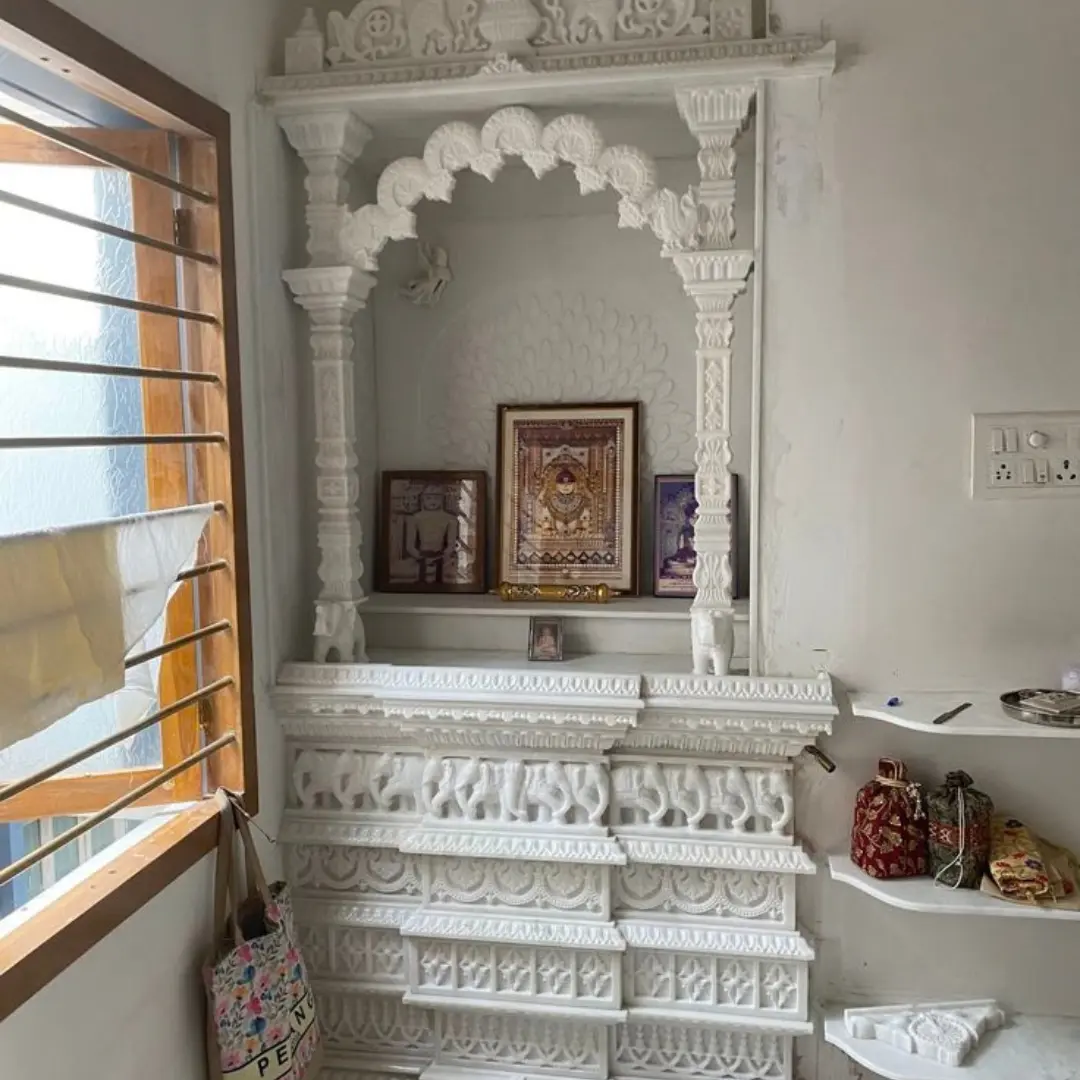
Traditional White Corner Mandir
White marble with a dome and an arched niche, so it sits neatly where two walls meet.
Enquire Now
Handmade Corner Mandirs
Have an empty corner in your flat or living room? A corner marble mandir for home fits right into it, so the rest of the room stays free. We make each one to your wall lengths and height, whether you need a small unit for a 1BHK flat or a larger carved mandir with domes and pillars.
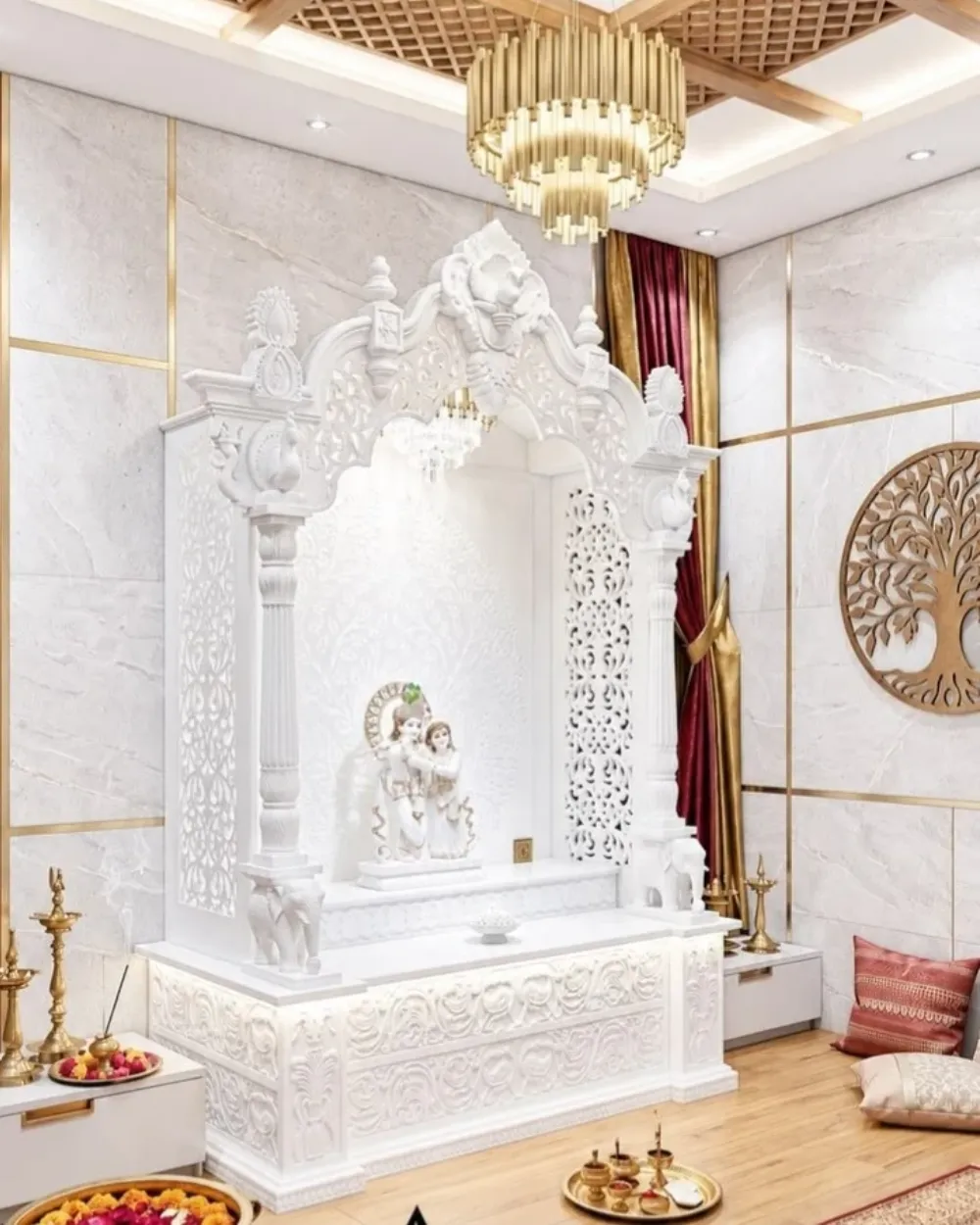
Pick a design you like and then tap Enquire Now. Also, every design can be made bigger, smaller or simpler to suit your corner and budget.
White marble with a dome and an arched niche, so it sits neatly where two walls meet.
Enquire Now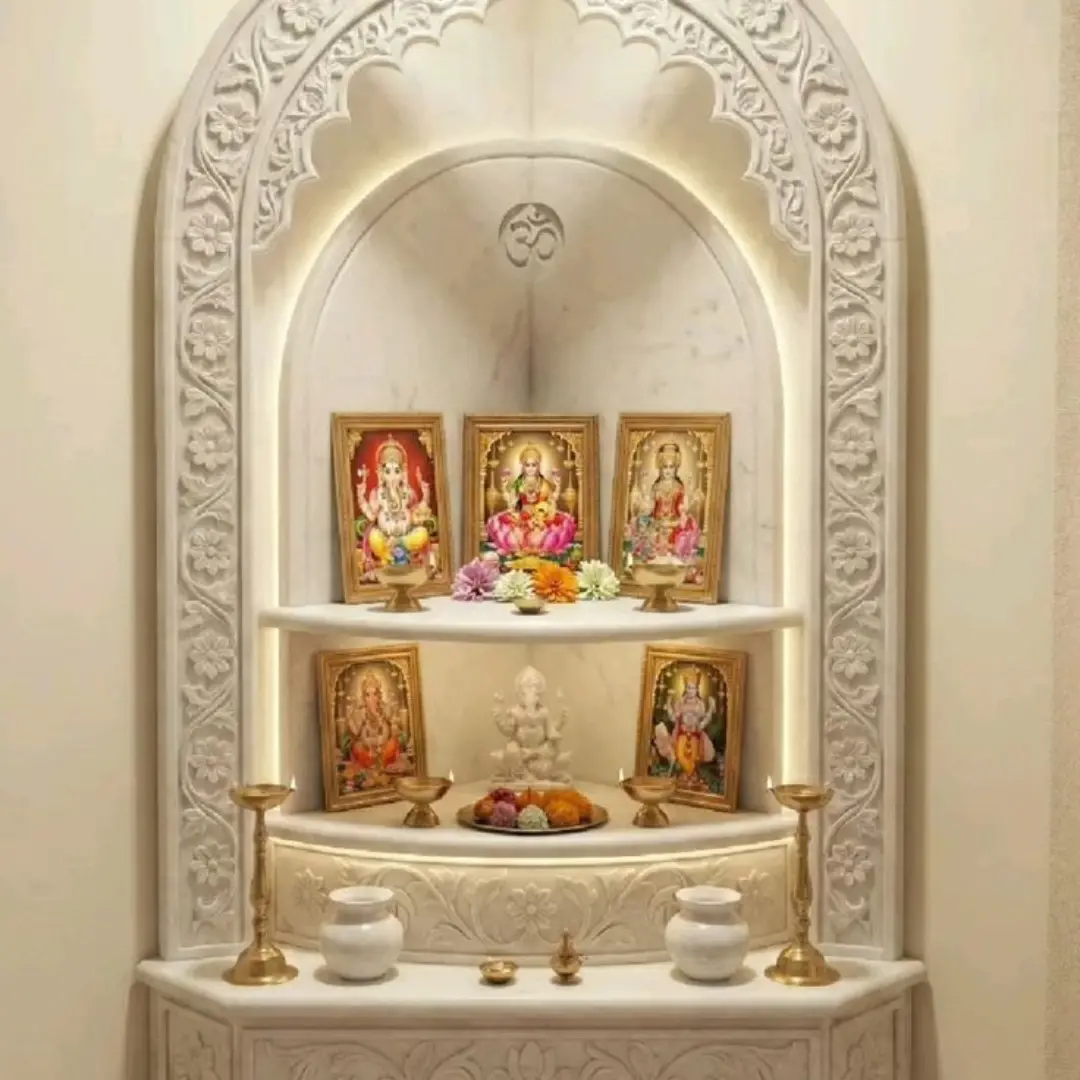
Hand-carved pillars and jali panels, especially for families who want rich detail.
Enquire Now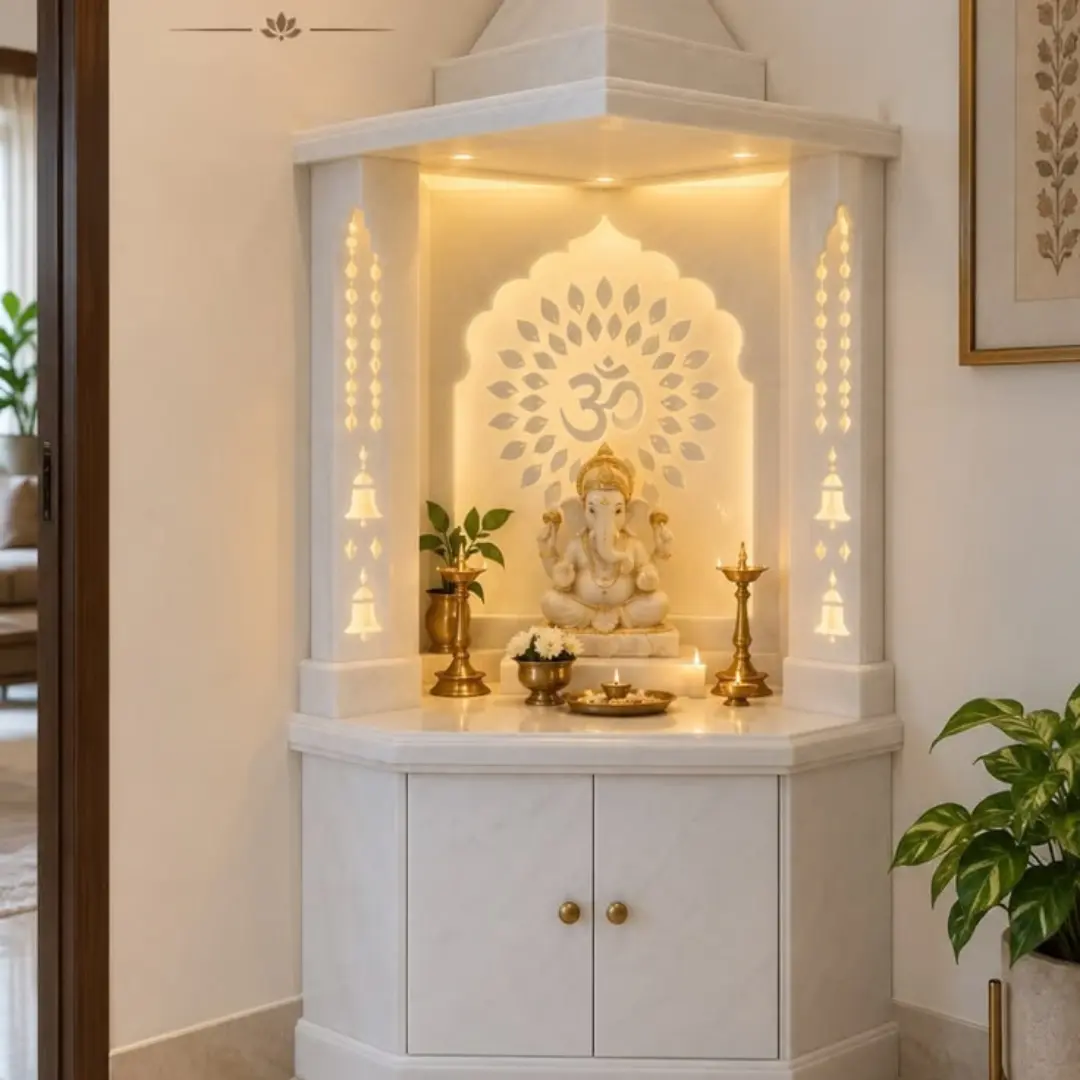
Clean lines and light carving, so it suits modern flats with plain walls.
Enquire Now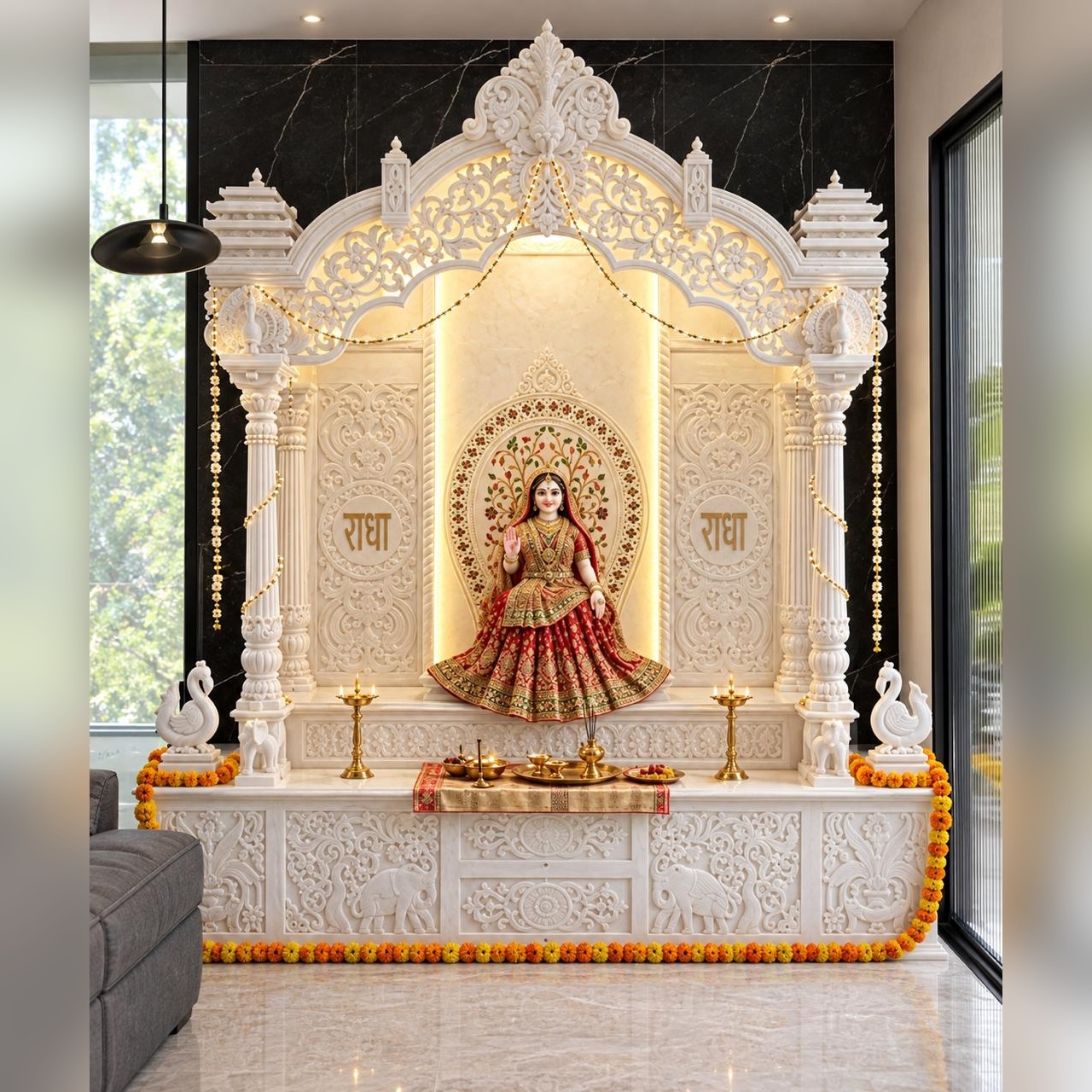
Small enough for a 1BHK or 2BHK, but it still has the dome and niche.
Enquire Now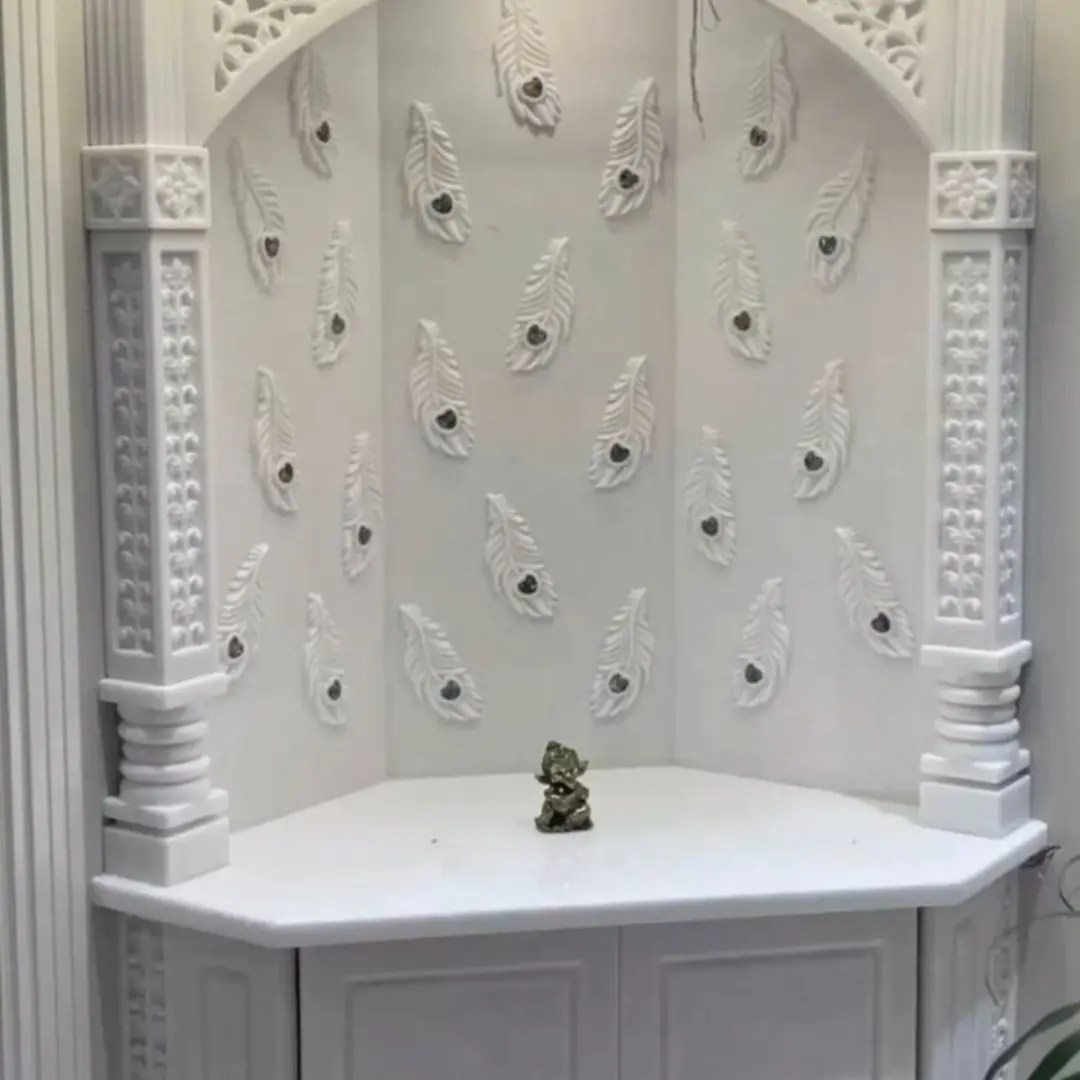
Gold work on ivory marble with warm lights inside, so it looks especially good in the evening.
Enquire Now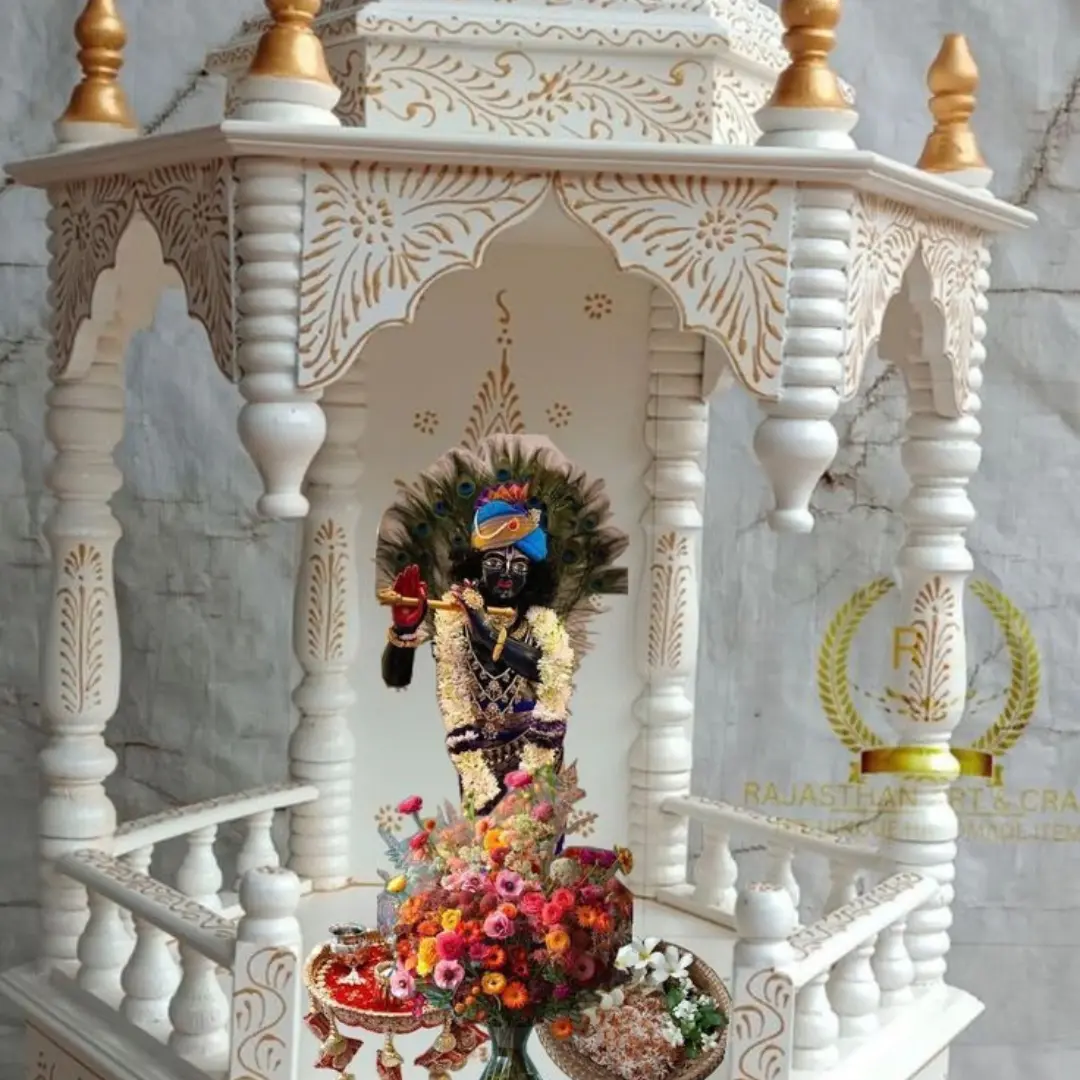
Several domes and a wider base, especially for homes that want a bigger pooja corner.
Enquire Now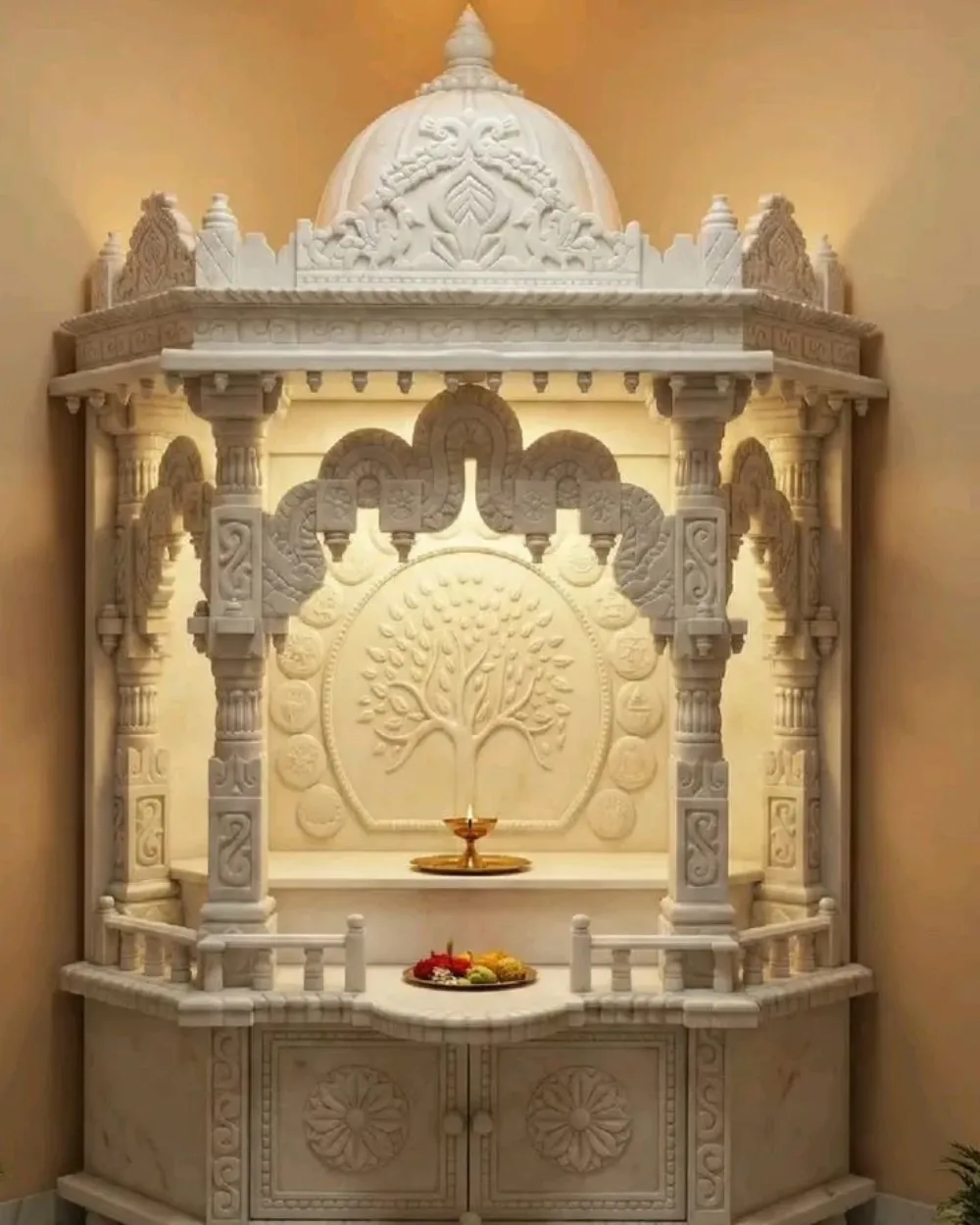
Carved marble doors in front, so you can keep them open during pooja and close them after.
Enquire Now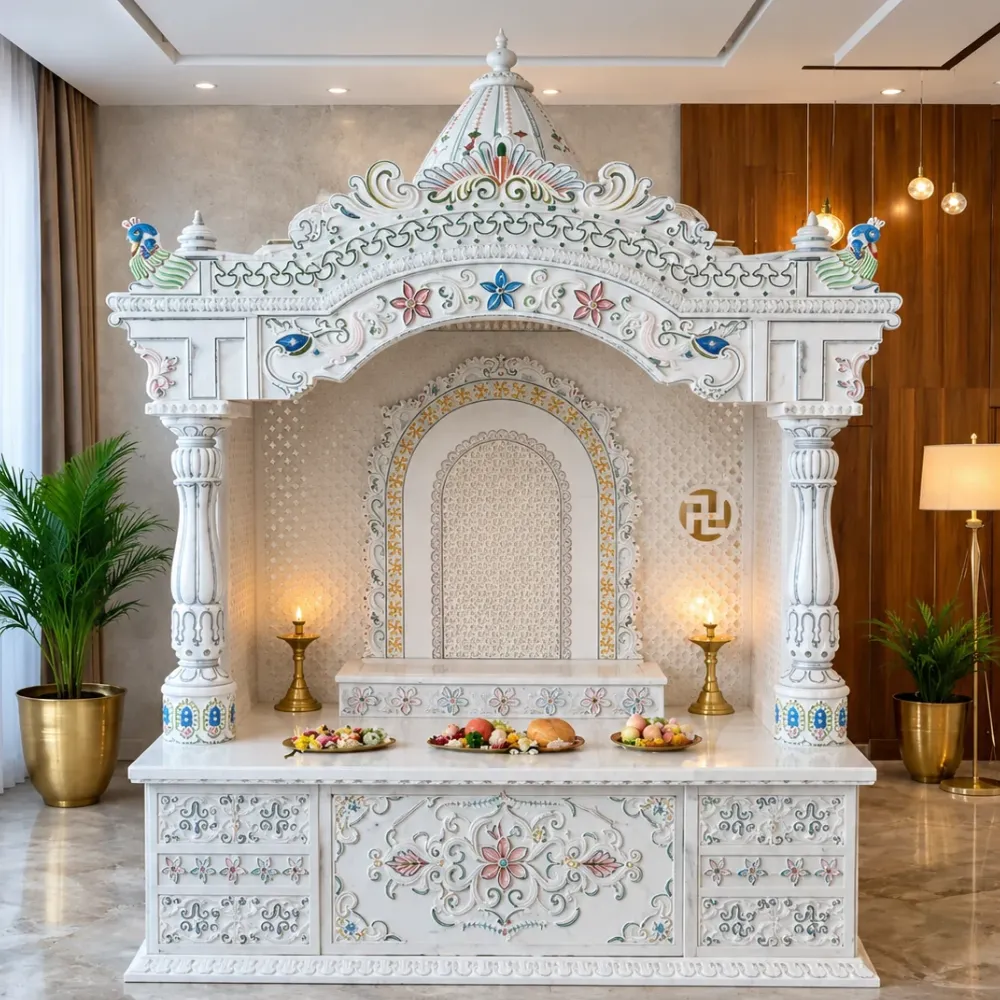
Drawers in the base hold diyas, agarbatti and pooja books, so the top stays neat.
Enquire NowThe right design depends on the corner you have rather than on budget alone. So here is what usually works in different homes.
| Type of home | Corner you usually have | What works well |
|---|---|---|
| 1BHK or studio flat | A corner of the living room or hall | A compact corner mandir on a raised base, so the room still feels open |
| 2BHK or 3BHK flat | A corner in the living or dining area | A medium corner mandir with doors or drawers below, so pooja items stay organised |
| Villa or independent house | A corner of a large hall or a separate pooja room | A large multi-dome corner mandir with storage and enough space so the family can sit together |
Have a full wall or a separate room instead? In that case, see our pooja room for home designs.
Measuring Guide
A corner mandir has to fit two walls at once, so getting the size right matters more than with a regular mandir. These are the five things we ask every customer before we start.
Send us these details with a photo of the corner, and then we will tell you which designs will fit.
Measure each wall from the corner outwards, up to where you want the mandir to end. Walls are not always at a perfect right angle, so a photo helps us check.
Measure from the floor to the ceiling, and also note any window, switchboard or beam near the corner.
Decide how far the mandir can come out into the room without blocking a door or walkway. Also keep space in front to sit or stand during aarti.
Check which direction the corner faces, because Vastu traditionally prefers the north-east corner for a mandir.
Corners are often darker than the rest of the room, so plan a warm light inside the niche or a spotlight above.
A corner mandir is one of the most practical choices for Indian homes, especially flats. Here is why so many families choose one.
Most homes have a corner that stays empty, so a corner mandir turns unused space into a proper place for pooja.
Vastu Shastra traditionally prefers the north-east corner for a mandir, and a corner design fits that spot naturally.
Because the mandir sits against two walls, the middle of the room stays free for furniture and daily use.
When it is made to your exact wall lengths, the mandir looks like part of the room instead of a piece placed in front of a wall.
Two walls on the sides mean the flame is less exposed to fan air than a mandir standing in the open.
A corner mandir can be small for a 1BHK flat or large for a villa, so it suits almost every home.
Both are good choices, but they suit different spaces. So here is a simple comparison to help you decide.
| Point | Corner mandir | Wall mandir |
|---|---|---|
| Space it uses | A corner that usually stays empty | A full stretch of wall |
| Best spot | The north-east corner, which Vastu traditionally prefers | Any free wall, especially on the east or north side |
| Look in the room | Looks built-in, since it fits into the corner | Stands out as a feature piece on the wall |
| Room left free | More, because the middle of the wall stays open | Less, since it takes up part of a wall |
| Measuring | Needs both wall lengths, so a photo helps | Needs only width, height and depth |
| Best for | Small flats, living rooms and north-east corners | Homes with a long free wall or a separate pooja room |
If you have an empty corner, especially in the north-east, a corner mandir is usually the better choice. On the other hand, if you have a long free wall, a wall mandir can work just as well.
Many families like to follow Vastu Shastra when they set up a pooja corner. Treat these points as general guidance, because every home is different, and ask your family priest or a Vastu expert about your own home.
Vastu Shastra traditionally treats the north-east corner (Ishan kona) as the best place for a mandir. If it is not free, then the east or north side is the usual next choice.
Many families set up the mandir so that they face east or north while doing pooja. We can also plan the design so this works in the corner you have.
Place idols on a raised base instead of directly on the floor, ideally at about chest height when you sit in front.
Try not to use a corner under the stairs, next to a bathroom wall or inside a bedroom. But if the bedroom is the only option, use its north-east corner and close the mandir at night.
White, cream and light yellow are the usual colours for a pooja corner. That is also why white marble is such a popular choice.
Remove broken idols, torn pictures and old flowers regularly, because a clean corner looks brighter and feels calmer.
Ideas
Corners usually get less light than the rest of the room, so lighting makes a big difference to how a corner mandir looks, especially during evening aarti.
Tell us which of these you want when you share your size, so we can plan for them in the design.
A small warm spotlight in the ceiling above the corner lights up the dome, especially when the room lights are off.
A warm white LED strip (around 2700K to 3000K) hidden inside the arch lights the idols softly, so there is no glare.
Since a corner mandir has two side panels, carved jali on those sides can be lit from behind for soft patterns on both walls.
Hanging brass bells finish the look, while a proper diya stand keeps the flame away from the walls.
In a living room or bedroom, doors or a curtain let you close the mandir when it is not in use.
This is how an order works, from your first message until fitting at home.
To begin with, send us both wall lengths, the height and a photo on WhatsApp or through our contact form.
We then suggest corner designs that fit and send you a quote.
You see the design before we start, and changes are made at this stage.
After that, our artisans carve, polish and finish the marble by hand.
Larger mandirs are made in parts, so our team assembles them in your corner at home.
Every corner mandir is made to order, so it fits your walls and the way your family does pooja.
We pick marble with even colour and a smooth finish, so it holds up well over the years.
Our artisans carve and finish the pillars, jali and domes by hand, so every piece has fine detail.
No two corners are the same, so we design around your wall lengths, height and style.
Traditional temple design that also sits well in today's flats and villas.
Yes. Vastu Shastra traditionally treats the north-east corner of the home as the best place for a mandir, so a corner design fits well. If that corner is not free, then east or north are the usual alternatives.
Measure both walls from the corner outwards, the height from floor to ceiling, and how far the mandir can come into the room. Then send these with a photo of the corner, and we will suggest a size.
It depends on your wall lengths, the ceiling height and how much floor space you can spare. For example, a 1BHK flat usually needs a compact design, while a separate pooja room can take a large multi-dome mandir.
Yes. Compact corner mandirs work especially well in 1BHK and 2BHK flats, because they use the corner and leave the rest of the room open.
It depends on your space. A corner mandir uses a corner that usually stays empty, so it suits small flats and north-east corners. On the other hand, a wall mandir works better when you have a long free wall.
It is better to avoid it. But if the bedroom is the only option, Vastu traditionally suggests its north-east corner, and many families use doors or a curtain to cover the mandir at night.
The price depends on the size, the marble, how much carving there is and any gold work. For example, a small plain corner mandir costs much less than a large carved one. So share your size and the design you like for an exact quote.
Yes. You can change the size, the carving or the number of domes, and you can also add doors or drawers. We share the design with you for approval before we start making it.
This is quite common in homes. So send us a photo along with your measurements, and then we will plan the back of the mandir to sit properly against both walls.
Yes, marble is heavy, so it needs a firm and level floor. Our team will guide you on placement, but please also check the floor strength with your builder or contractor.
Depending on the size, larger corner mandirs are made in parts, and then our team assembles them at your home.
Wipe it with a soft cloth and plain water. Do not use acid-based or harsh cleaners, because they can damage the polish. Also wipe off oil and kumkum stains quickly so they do not soak in.