Traditional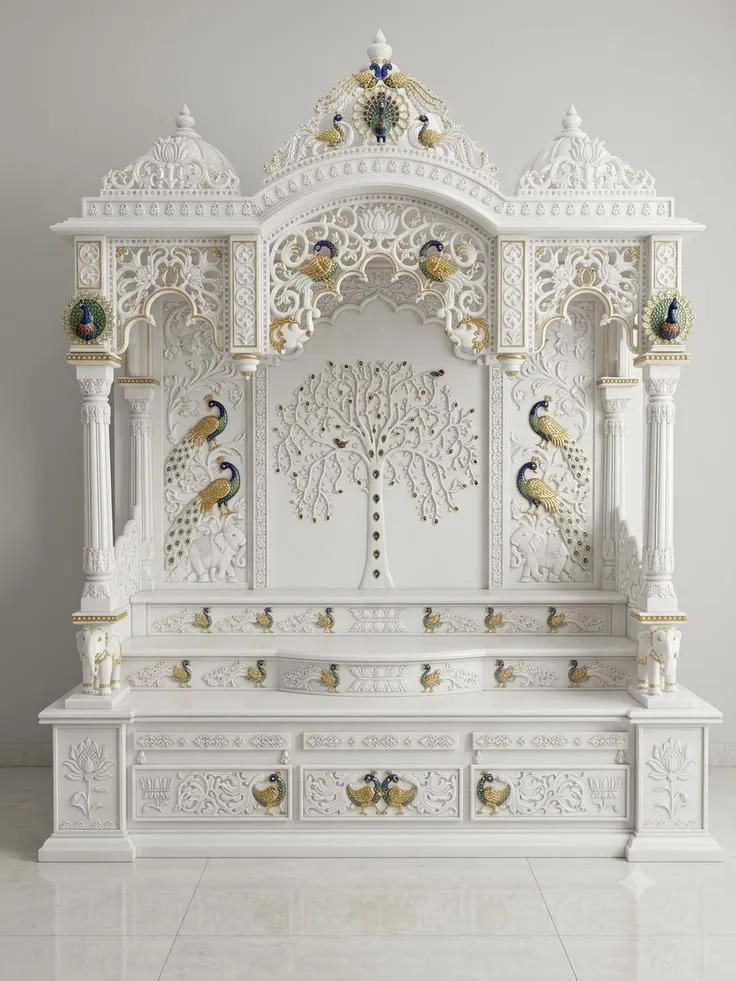
Traditional White Standing Mandir
White marble with a dome and an arched niche on its own base, so it suits almost any pooja room.
Enquire Now
Handmade Floor Mandirs
Want a mandir that stands on the floor like a small temple, instead of sitting on a shelf? A standing mandir for home rests on its own base, so it becomes the centre of your pooja room. We make each one to your height and width, whether you need a compact floor mandir for a flat or a tall carved one with a shikhara.
Pick a design you like and then tap Enquire Now. Also, every design can be made taller, shorter or simpler to suit your room and budget.
White marble with a dome and an arched niche on its own base, so it suits almost any pooja room.
Enquire Now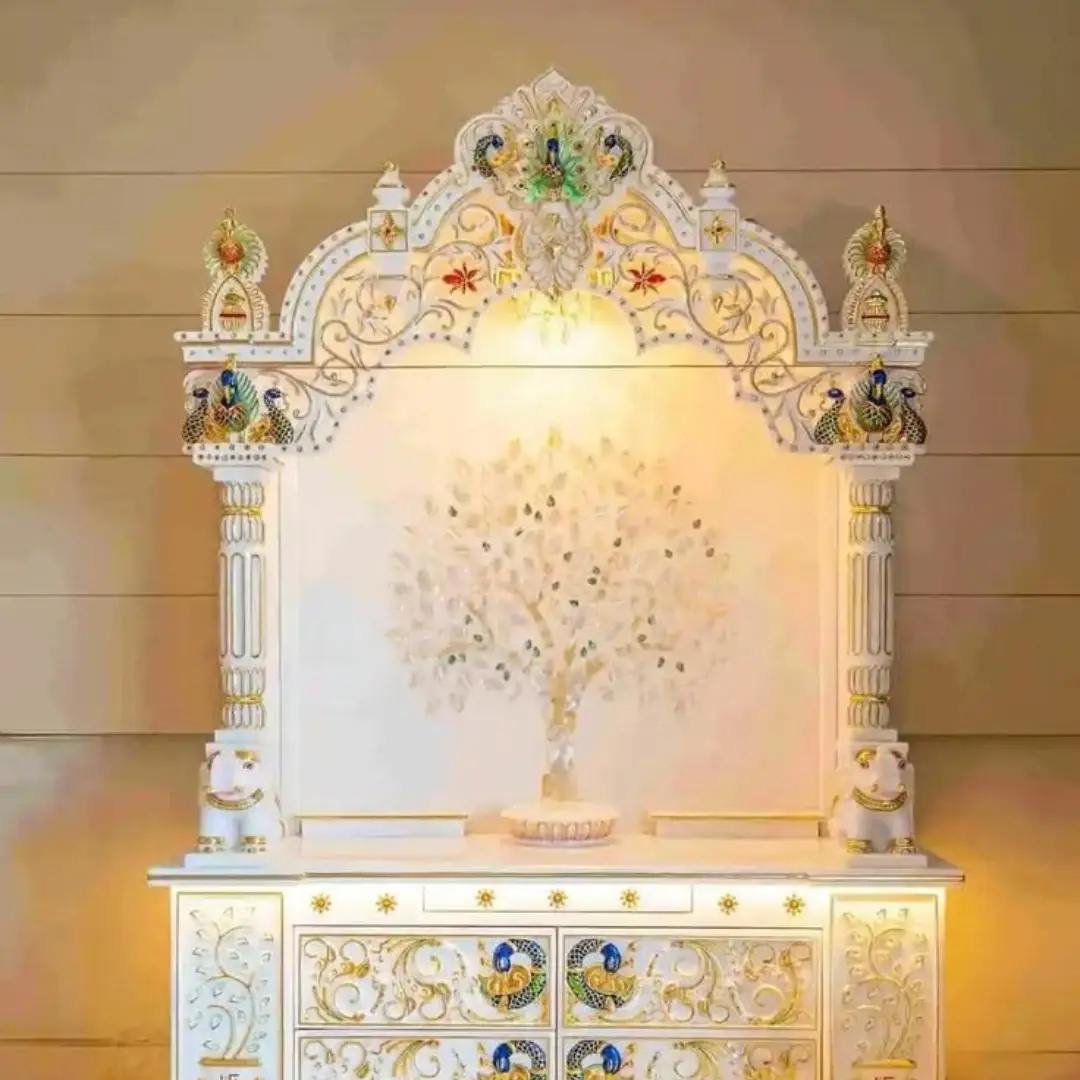
Hand-carved pillars and jali panels, especially for families who want rich temple detail.
Enquire Now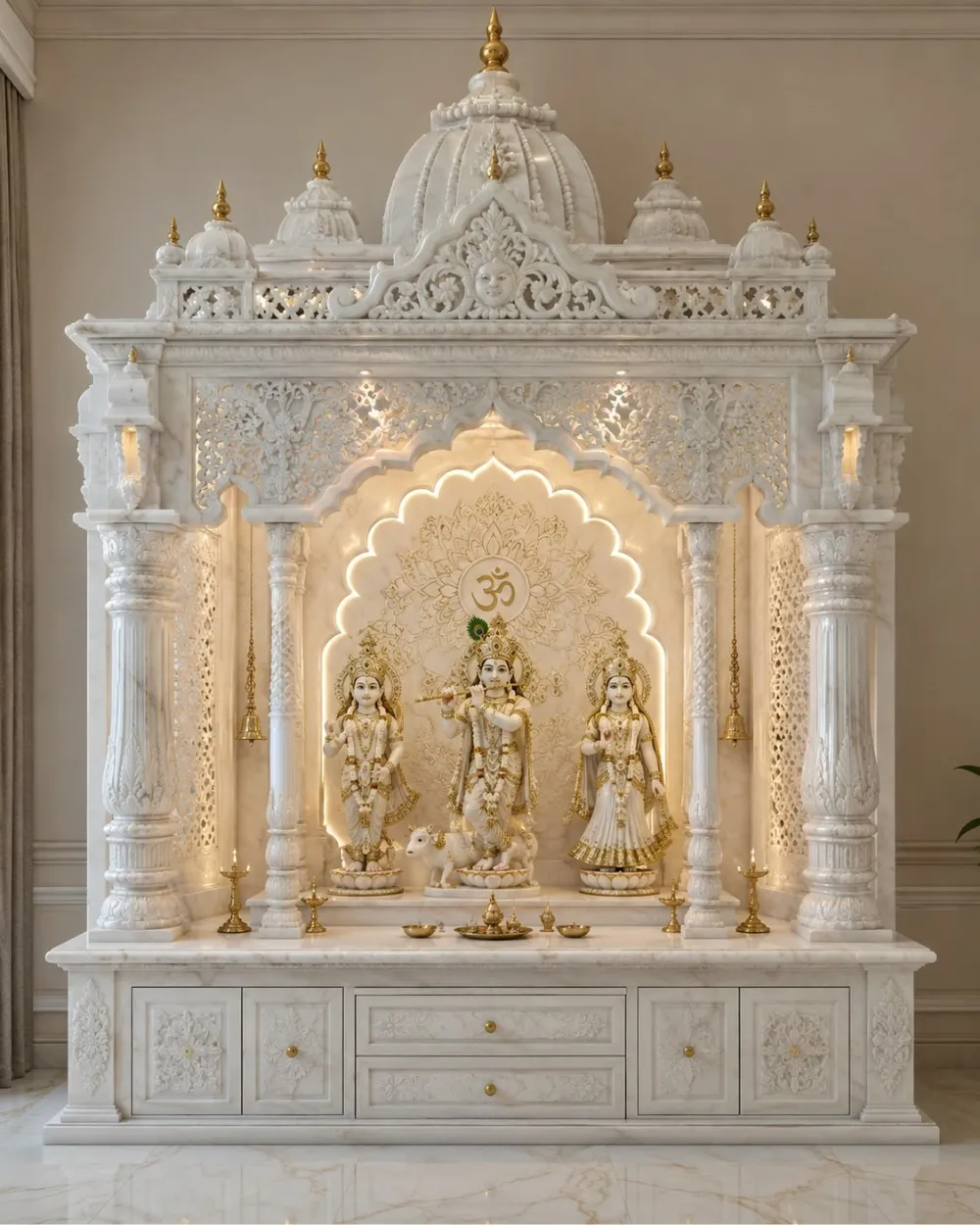
Clean lines and light carving, so it sits well with modern furniture and plain walls.
Enquire Now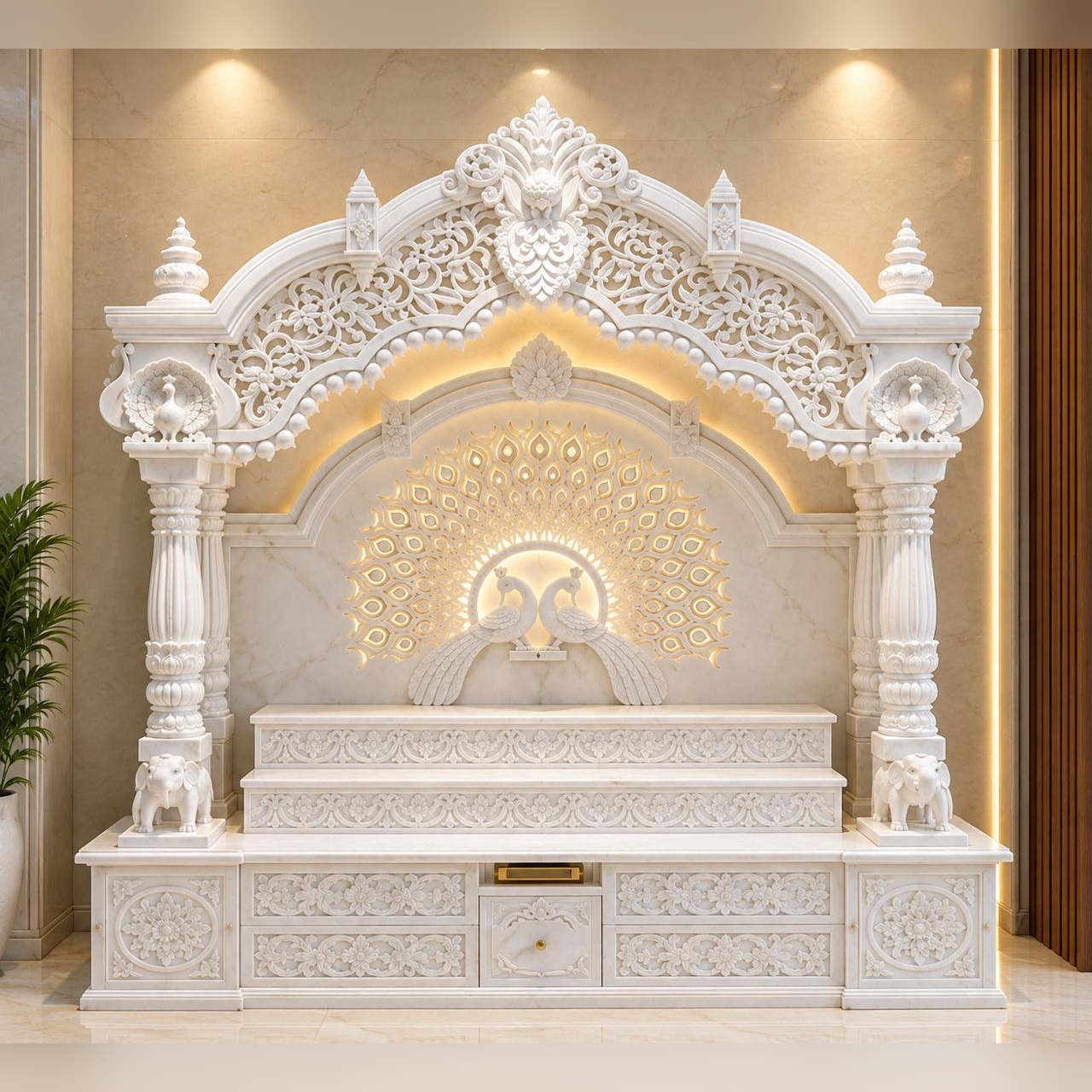
Smaller in width and height, but it still has a proper base, dome and niche.
Enquire Now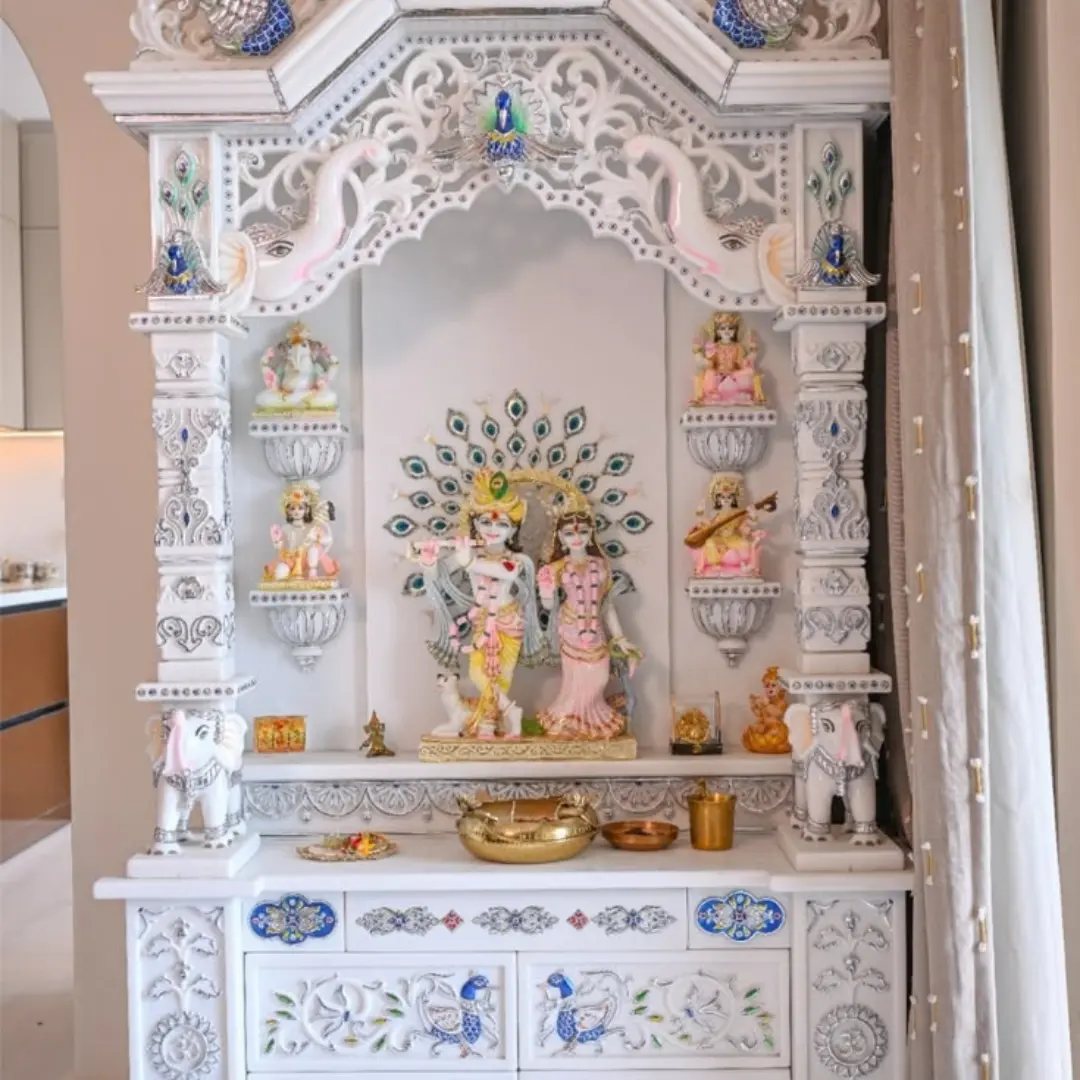
Gold work on ivory marble with warm lights inside, so it looks especially rich in the evening.
Enquire Now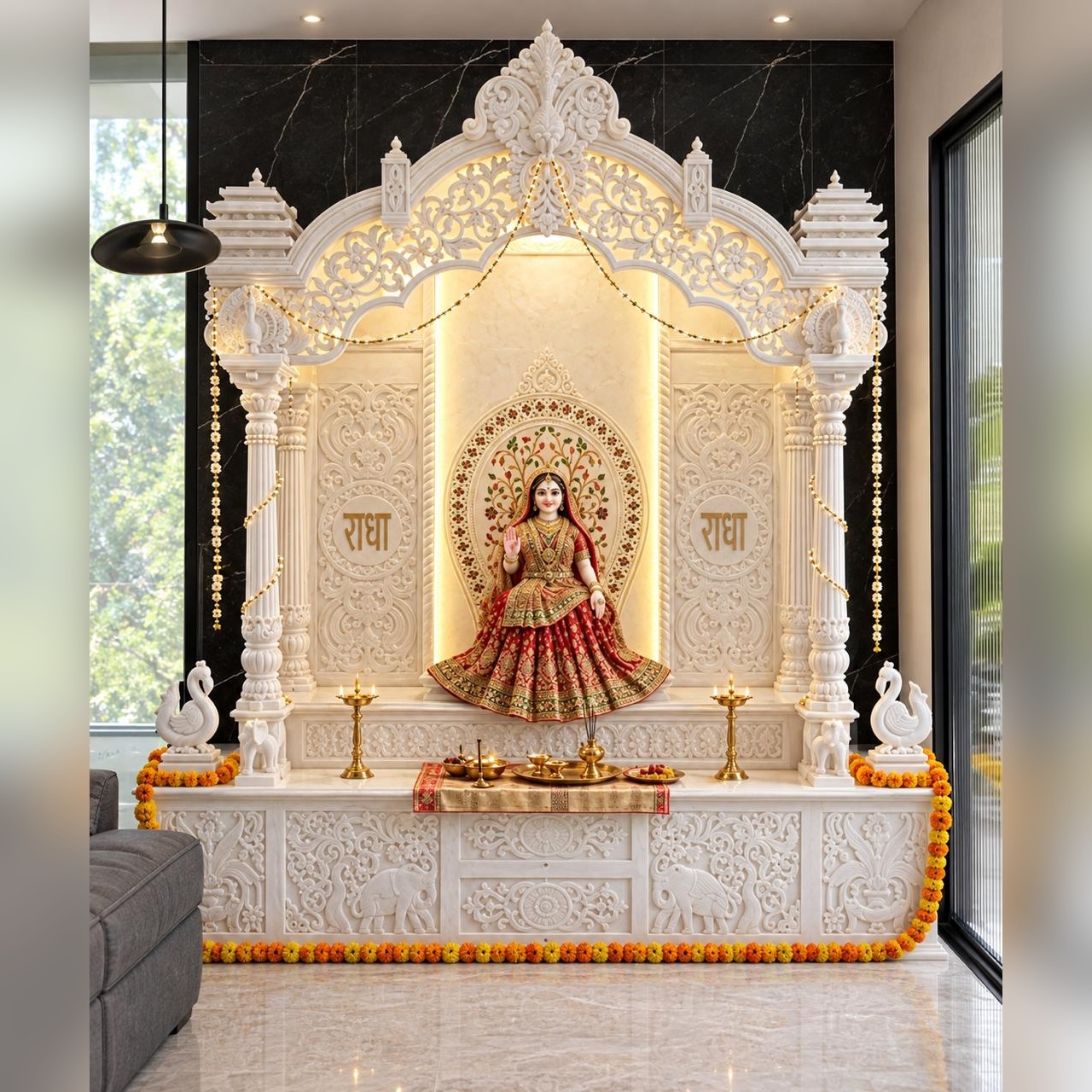
Several domes and a wide base, especially for homes with a separate pooja room.
Enquire Now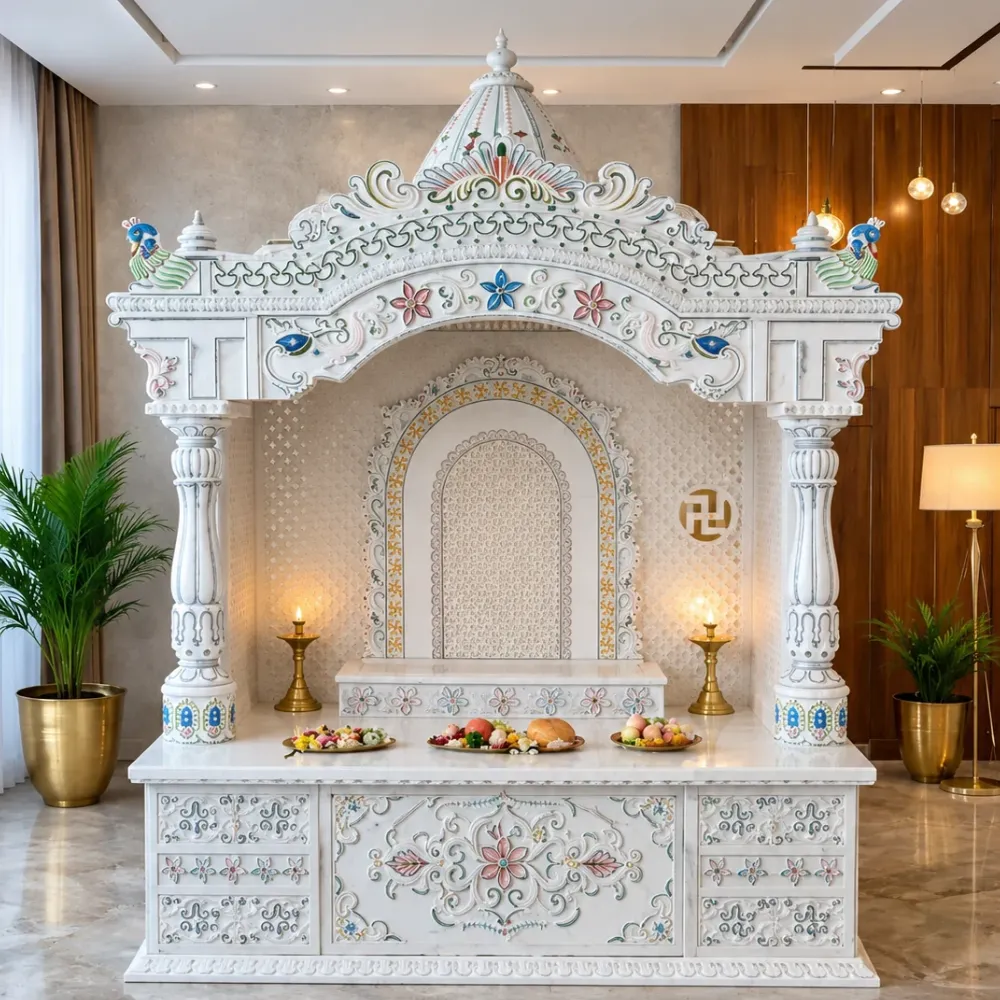
A tall carved shikhara on top, so it looks like a traditional North Indian temple.
Enquire Now
Drawers and a cabinet in the base hold diyas, agarbatti and pooja books, so the top stays neat.
Enquire NowThe right design depends on the space you have rather than on budget alone. So here is what usually works in different homes.
| Type of home | Space you usually have | What works well |
|---|---|---|
| 1BHK or 2BHK flat | A wall or corner in the living room | A compact standing mandir with a storage base, so it takes little floor space |
| 3BHK flat | A pooja corner or a small pooja room | A medium floor mandir with carved pillars and doors, so it can be closed when not in use |
| Villa or independent house | A separate pooja room with good ceiling height | A tall shikhara or multi-dome standing mandir, with enough space so the family can sit together |
Only have an empty corner? In that case, see our corner marble mandir designs, or browse all pooja room for home ideas.
Size Guide
Height matters more with a standing mandir than with any other type, because it decides where the idols sit when you do pooja. These are the five things we check with every customer before we start.
Send us these details with a photo of the space, and then we will tell you which designs will fit.
Measure from the floor to the ceiling. Then leave some space above the top of the mandir, so the dome or kalash does not touch the ceiling and a light can fit above it.
If your family sits on the floor for pooja, the idols should be lower. But if you mostly stand, the mandir can be taller, so plan the height around how you pray.
Measure the wall or corner where it will stand, and also keep enough space in front to sit or stand comfortably during aarti.
Marble is heavy, so the mandir needs a firm and level floor. Also check that the tiles and the floor below can take the weight.
Check which wall or corner faces north-east, because Vastu Shastra traditionally prefers it for a mandir.
A standing mandir is the closest you can get to a real temple inside your home. Here is why so many families choose one.
A standing mandir rests on its own base, so it looks like a small temple instead of a shelf on the wall.
Because it stands on the floor, you usually do not need to drill into walls or tiles to fix it.
A floor mandir has more room inside, so it can hold bigger idols and several deities together.
The base can include drawers or a cabinet, so diyas, agarbatti and pooja books stay close at hand.
We plan the height around whether your family sits or stands, so the idols are at a comfortable level.
Since it stands on its own, a standing mandir becomes the main feature of the pooja room or hall.
Both are popular, but they suit different homes. So here is a simple comparison to help you decide.
| Point | Standing mandir | Wall-mounted mandir |
|---|---|---|
| Where it goes | Stands on the floor, against a wall or in a corner | Fixed on the wall |
| Size | From compact to tall temple-style designs | Usually smaller, since the wall carries the weight |
| Idols | Room for larger idols and several deities | Better for small idols and pictures |
| Installation | Placed and assembled on a firm floor | Drilled into a strong wall |
| Storage | Drawers or a cabinet can go in the base | Little or no storage |
| Best for | Pooja rooms, halls and families who want a temple look | Very small flats with no free floor space |
If you have some free floor space and want a temple look, a standing mandir is usually the better choice. On the other hand, if the floor is fully used, a wall-mounted mandir can still work.
Many families like to follow Vastu Shastra when they place a floor mandir. Treat these points as general guidance, because every home is different, and ask your family priest or a Vastu expert about your own home.
Vastu Shastra traditionally treats the north-east corner (Ishan kona) as the best place for a mandir. If it is not free, then the east or north side is the usual next choice.
Many families set up the mandir so that they face east or north while doing pooja. We can also plan the design so this works in your room.
A common practice is to keep the idols at about chest height when you sit in front. So the height of a standing mandir matters more than with a wall mandir.
Many families leave a small gap between the back of the mandir and the wall, especially in homes that follow Vastu closely.
Try not to place it under the stairs, against a bathroom wall or inside a bedroom. But if the bedroom is the only option, use its north-east part and close the mandir at night.
White, cream and light yellow are the usual colours for a pooja space. That is also why white marble is such a popular choice.
Ideas
A standing mandir is usually the main piece in the room, so good lighting and a few small details make a big difference, especially during evening aarti.
Tell us which of these you want when you share your size, so we can plan for them in the design.
A warm white LED strip (around 2700K to 3000K) hidden inside the arch lights the idols softly, so there is no glare.
A small warm spotlight above the mandir lights up the dome or shikhara, especially when the room lights are off.
Hanging brass bells finish the look, while a proper diya stand keeps the flame away from the marble and walls.
A marble inlay border marks the pooja area, or you can instead leave a clear patch of floor in front for rangoli.
Carved doors let you close the mandir when it is not in use, which is especially useful in a living room.
This is how an order works, from your first message until fitting at home.
To begin with, send us the ceiling height, the width and depth of the space and a photo on WhatsApp or through our contact form.
We then suggest standing mandir designs that fit and send you a quote.
You see the design before we start, and changes are made at this stage.
After that, our artisans carve, polish and finish the marble by hand.
Larger mandirs are made in parts, so our team assembles them at your home.
Every standing mandir is made to order, so it fits your room and the way your family does pooja.
We pick marble with even colour and a smooth finish, so it holds up well over the years.
Our artisans carve and finish every shikhara, dome and pillar by hand, so each piece has fine detail.
We design around your ceiling height and how your family prays, so the idols sit at the right level.
Traditional temple design that also sits well in today's flats and villas.
Families who got their mandir made by Aura Marble.
The craftsmanship is truly outstanding. We ordered a custom white marble mandir, and it exceeded our expectations. The detailing, finish and quality of the marble are exceptional.
The team understood exactly what we wanted for our pooja room. The mandir fits the space perfectly, and the carving looks even better in person.
From the 3D design to the installation, everything was handled with care. Our family now begins every morning in front of a mandir we are proud of.
It depends on your ceiling height and how your family does pooja. For example, if you sit on the floor, the idols should be at about chest height when seated. So share your ceiling height and we will suggest the right size.
Measure the ceiling height and the width and depth of the space where it will stand. Then send these details with a photo, and we will suggest proportions that suit the room.
Vastu Shastra traditionally prefers the north-east corner of the home. If that is not possible, then the east or north side is the usual alternative.
Yes. Compact standing mandirs are made for 1BHK and 2BHK flats, so they take little floor space but still have a proper base, dome and niche.
It depends on your space. A standing mandir can be larger, hold bigger idols and have storage in the base. On the other hand, a wall-mounted mandir suits very small flats with no free floor space.
Usually it stands on its own base. However, for tall designs our team may suggest fixing it to the wall for extra safety, especially in homes with small children.
Marble is heavy, so a firm and level floor is important. Our team will guide you on placement, but please also check the floor strength with your builder or contractor.
Large marble mandirs are heavy, so it is best to plan the final position before installation. But if you may want to move it later, tell our team first, so we can plan the design in parts.
Yes. You can change the size, the carving, the number of domes or add a storage base. We share the design with you for approval before we start making it.
The price depends on the size, the marble, how much carving there is and any gold work. For example, a compact plain floor mandir costs much less than a tall carved one. So share your size and the design you like for an exact quote.
Depending on the size, larger mandirs are made in parts, and then our team assembles them at your home.
Wipe it with a soft cloth and plain water. Do not use acid-based or harsh cleaners, because they can damage the polish. Also wipe off oil and kumkum stains quickly so they do not soak in.